
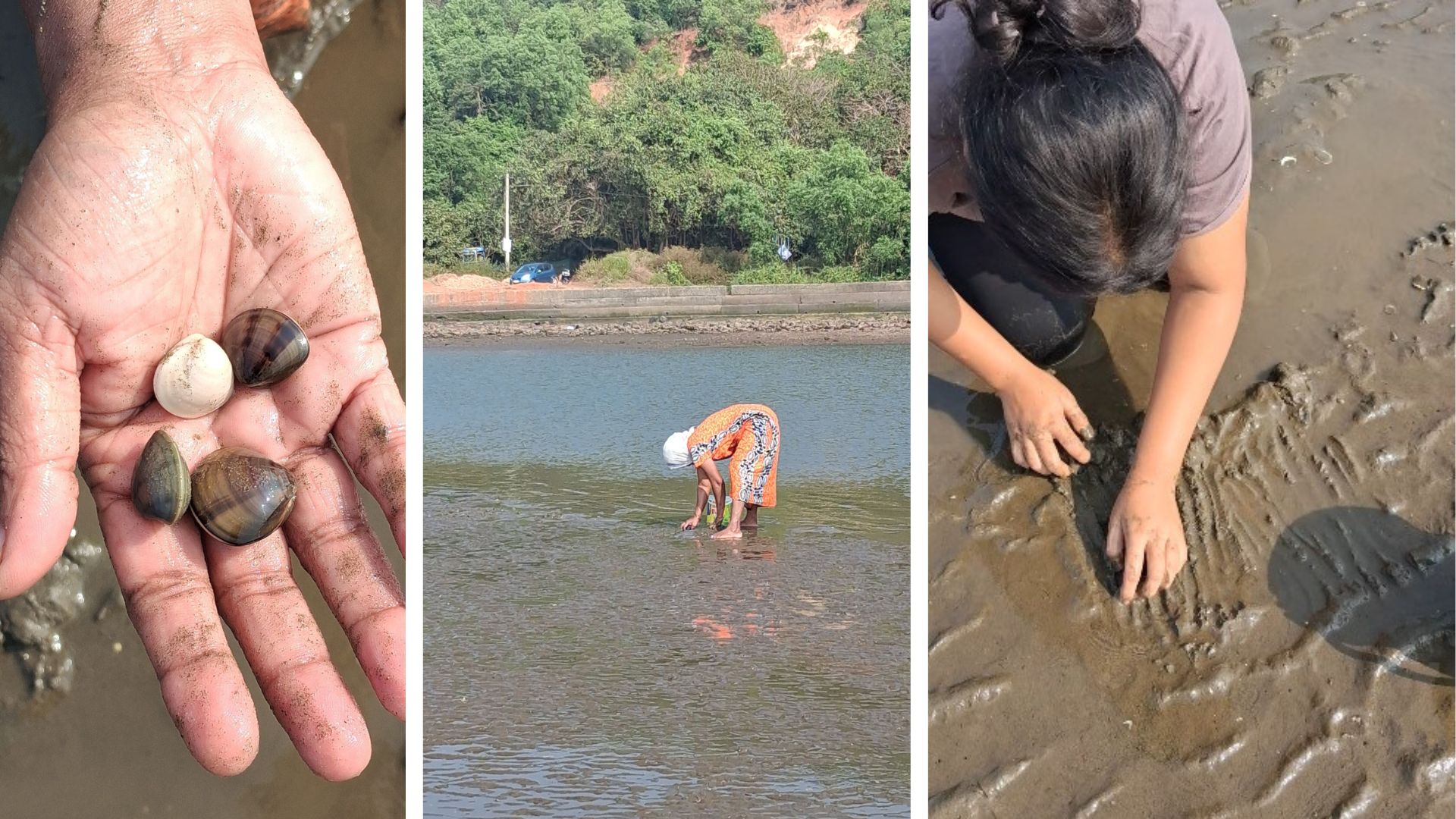
It was a balmy afternoon in early February as I made my way to Badem in Siolim, along the banks of the Chapora river in North Goa. Being a Sunday, it was the perfect time for locals to indulge in an activity which is part and parcel of their daily lives — foraging for khube, or bay clams (Meretrix clams), which are found buried in the riverbed during low tide.
More than three decades ago, this form of foraging was a common practice among locals. Today, however, as clams are readily available in markets, the tradition is slowly fading away. The task also demands patience and endurance, with people spending long hours under the hot sun to gather even a single bag of clams.
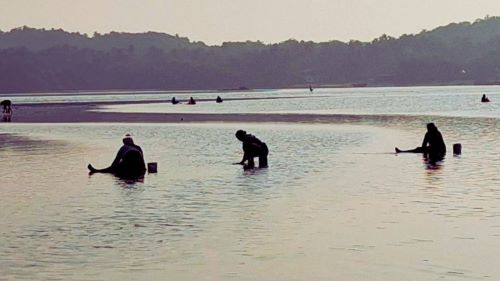
However, when I reached the spot, I was pleasantly surprised to see hundreds of people spread across the riverbed, busy foraging for clams.
Pratima Chodankar, a local, has been engaged in this practice for over 20 years. Along with her daughter, Vidhi, she shared insights into the activity, noting that people from neighbouring villages now also come here to harvest clams. According to them, social media has made it easier for information about the harvest to spread widely.
SUNDAY SPECIAL
Traditionally, this activity brought families together, especially on Sundays. Parents and children would head to the riverbed to collect clams, turning the outing into a shared experience that fostered bonding and the joy of discovering these marine treasures.
Khube are collected by digging fingers into the river sand, a task that requires both patience and experience to identify the right shells.
Vidhi points out that khube should not be confused with tisryo (Paphia malabarica), another type of shellfish. “The shells of khube are smoother compared to tisryo,” she explains.
I was impressed by Vidhi — a teenager with remarkable knowledge about clams and considerable expertise in foraging them. She enthusiastically shared several tips and insights while indulging in this activity.
While searching for khube, one can also come across blood clams (Tegillarca granosa), locally known as raktaal in Konkani because of their red interior. “These are edible, but not commonly consumed by locals. They are generally preferred by bodybuilders as they are rich in protein,” says Pratima.
She further explains that, along with khube, people also collect small quantities of moon snails. These are mainly gathered to add volume to the overall harvest.
HOW IT’S DONE
Foraging this shellfish is one of the many indigenous ways of sourcing food, and it is considered quite sustainable. Pratima shared that they know when it is the right time to harvest because of the fishermen. “When they bring their boats out into the river, they can feel these clams under their feet. It is an indication that it is the right time to harvest,” she said.
A FAMILY AFFAIR
She also mentions that she loves bringing her children along, as it is a fun outdoor activity and keeps them away from screens for a few hours, allowing them to engage in something that requires focus. It is also one of the best ways to make children aware of their surroundings.
Speaking of surroundings, it was heartbreaking to see the banks of the Chapora river lined with restaurants and pubs. Old houses have been converted into commercial establishments, often accompanied by loud music and other activities. It was a stark contrast — on one hand, locals continue a practice that has been followed for generations, while on the other, these establishments cater to tourists who may have little awareness of this community-driven tradition.
Such tourism and real estate activities, in the days to come, may pose a direct threat to marine biodiversity. These are among the few remaining pockets in Goa where such traditional practices are still observed.
READ MORE:
When tradition meets nature: Khube harvesting at Chapora in summer https://thevoiceforgoem.com/article.php?slug=when-tradition-meets-nature-khube-harvesting-at-chapora-in-summer
Comments (0)
Please login to post a comment.
No comments yet. Be the first to comment!