
The world of flora and fauna is full of wonder and beauty. Sometimes, however, it also involves sticky, smelly matter that we commonly refer to as excreta or waste. But in nature, nothing is wasted — everything has a purpose, including undigested remains. These are used by animals to mark territories, help build rainforests, and even tackle climate change.
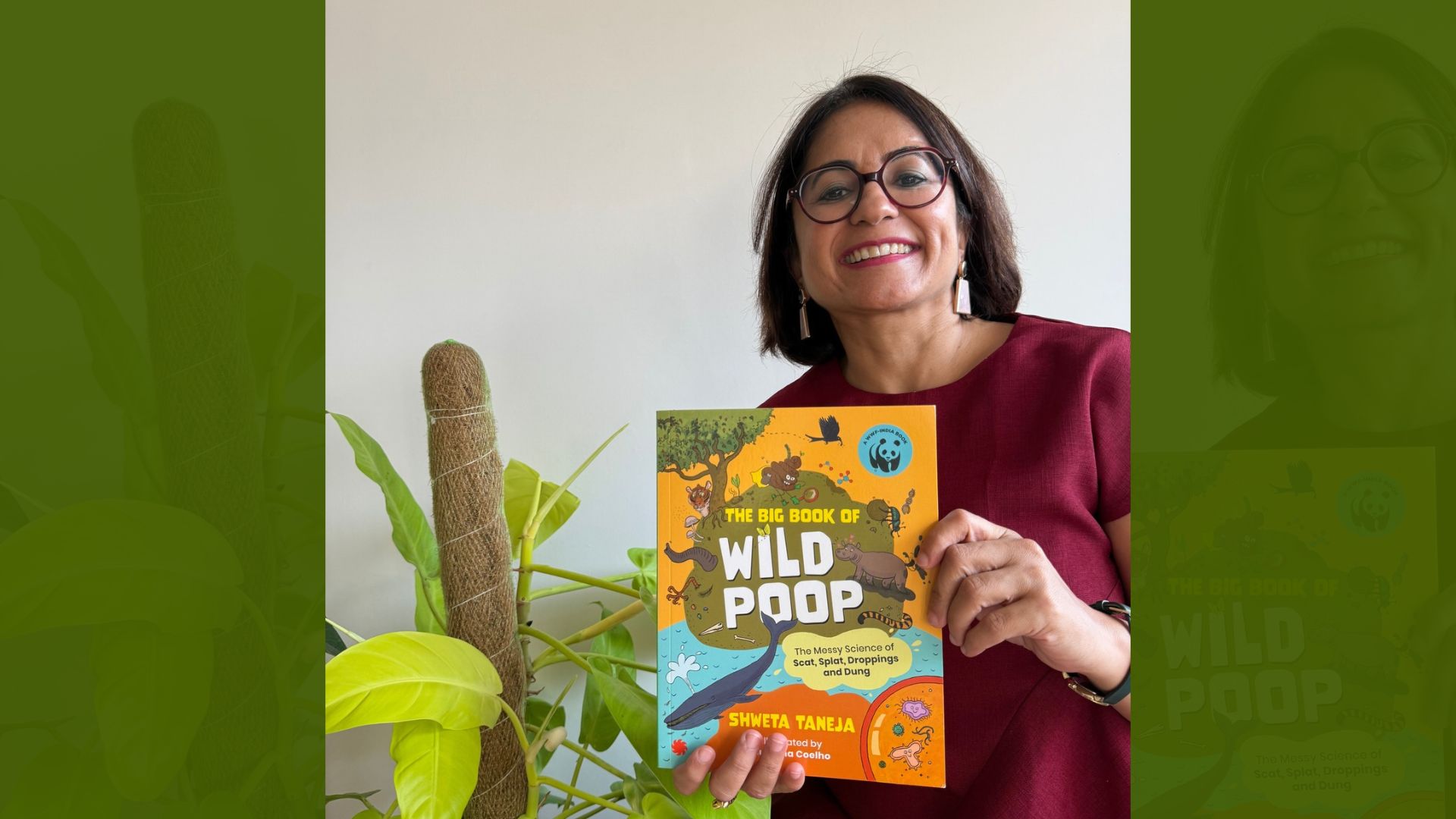
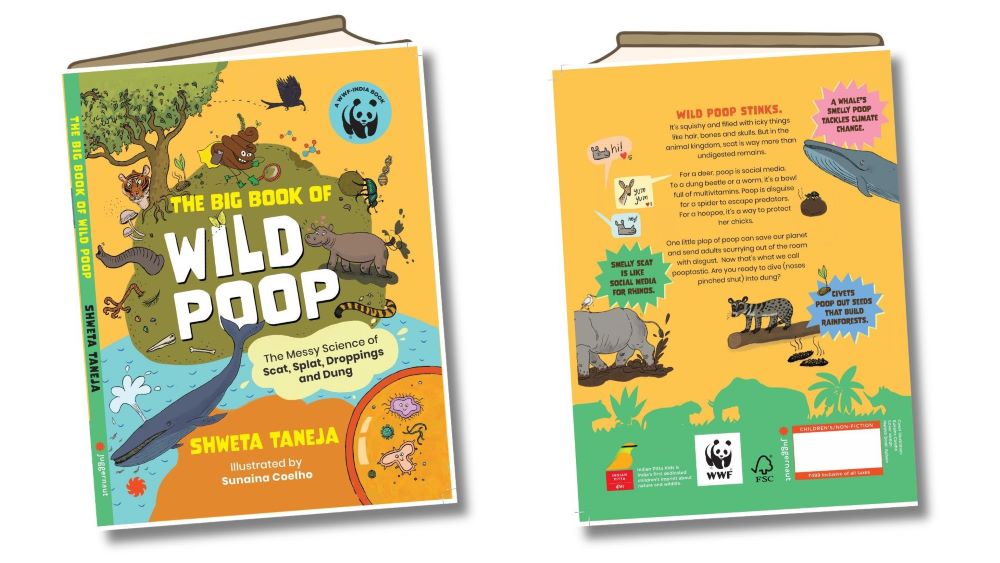
Revealing such interesting details about a topic which one may consider disgusting, is this new book, The Big Book of Wild Poop – The Messy Science of Scat, Splat, Droppings and Dung, by Bengaluru-based Shweta Taneja, with illustration by Sunaina Coelho. It is a children’s non-fiction book which is published by Juggernaut/Indian Pitta Books in association with WWF-India.
POOPY FACTS
The book covers a wide variety of fauna and is packed with fascinating facts. For dung beetles, for instance, poop is a home, a source of food, and much more. Jumping ants have a dedicated toilet space in their nests. For animals such as hippos and rhinos, dung is their social media. Communal latrines in the wild tell these animals who is of their age, who is ready to mate, and who poses a threat.
Lone carnivores use their scat to mark their territories. Animal dung also helps trees grow healthier. And a whale’s nutrient-rich poop feeds phytoplankton, which absorb about one-third of the world’s carbon dioxide and produce around half of the oxygen we need.
BEHIND THE BOOK
Taneja who writes science and fiction for kids and adults loves using humour in science non-fiction to make it interesting, especially for children. However, to get this right, it involved immense research and planning.
She says, “As with all science books I write, the first step was to build a premise, a structure around what chapters there would be, what the topic of wild poop means, what does it mean for animals, our forests, culture, society and for us as human beings. To figure this out, I scoured libraries, read scientific papers, journals and met and interviewed a lot of ecologists studying wild poop. Finally, the stories that I wanted to write began to emerge.”
Along with highlighting the importance of wild poop to wildlife, the book also reveals its significance for human beings. It was fascinating to learn that it is used to make perfumes and special facial treatments, and that, in some indigenous communities in Rajasthan, Madhya Pradesh, and Chhattisgarh, it is also used as part of traditional folk medicine.
The most common example is the use of coffee beans that have passed through the digestive system of civet cats, producing what is considered some of the world’s most expensive coffee. However, the popularity and high price of this coffee have also led to the exploitation of these animals.
This 80-page book, divided into 10 chapters, is packed with fascinating information and details. It makes us realise how deeply our lives are interconnected with nature and how something we may consider useless can be incredibly precious to the natural world.
Taneja, an avid birdwatcher, has now begun looking at poop—and wildlife in general—in a much more profound way.
“Before I wrote this book, I was a birdwatcher. The only time I would look down at the trail was to step around poop on forest trails and make sure I didn’t trip. Through the journey of researching this topic and writing this book, I’ve come to appreciate how essential poop is to wild ecosystems and how rich the science around this smelly subject is. Now, I can recognise the animal that has visited a forest trail by looking at its poop. I understand how essential dung and scat are to ecosystems. Wild poop has enriched my knowledge of wildlife and increased my lifelong fervour to know more about nature,” concludes Taneja.
Arti Das is a Goa-based freelance journalist who enjoys writing about art, culture and ecology
Comments (0)
Please login to post a comment.
No comments yet. Be the first to comment!