
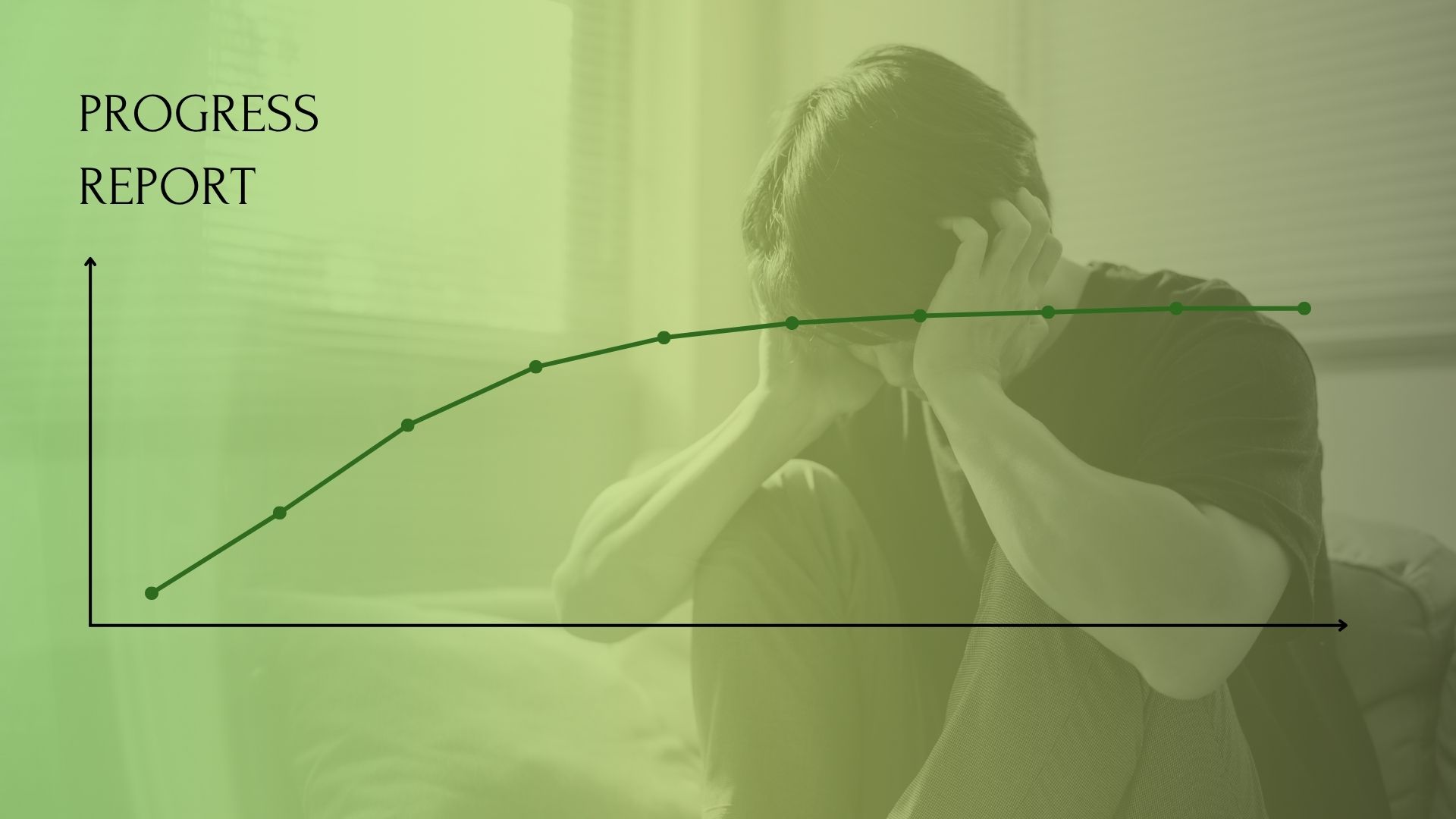
Recently, we held a parents’ meeting to discuss and distribute the six-monthly progress reports of our students.
I was conducting a session, and was therefore, not directly involved in handing over the reports. From my chair, I noticed Rohan’s mother staring into the distance with an expression I could only describe as a vacant gaze.
Curious, I stood up to see what had caught her attention. A colleague was explaining another student’s progress report to a parent. There was so much to share and appreciate. The parent was smiling; the teacher was excited.
Rohan is an adult with severe intellectual disability. There was a time when we spoke about his progress with the same excitement. His first attempt to indicate that he wanted water. His ability to sit for five minutes. His first independent step. Each milestone was a celebration, and rightly so.
But over the years, something changed. His goals seemed to repeat themselves. The achievements recorded in one report reappeared in the next. The language changed, perhaps, but the outcomes remained much the same.
And there I was, feeling guilty. I could not bring myself to acknowledge that sometimes, despite our best efforts, progress may not look the way we have been taught to expect.
We have built much of our special education practice around one word: progress.
Every six months, we are expected to report outcomes. Every Individualised Education Plan (IEP) is expected to guide development. Every success story seems to demand a before-and-after picture. Somewhere along the way, we risk creating the impression that intervention must always lead to improvement, and improvement must eventually lead to independence.
But, what do we tell a mother after years of intervention, when the progress graph appears to have become a flat line?
Too often, we say, “Practise more at home.” We suggest another therapy, change the approach or set a new target. Sometimes, we rephrase an unmet goal rather than acknowledge that the expected outcome may need to be reconsidered.
We do everything except have the difficult conversation.
Development does not follow a predictable, upward trajectory for every individual. For some people with severe or profound intellectual disabilities, acquiring new skills may be slow, limited or inconsistent. Maintaining existing skills, supporting well-being and enabling meaningful participation may also become important priorities.
A plateau in skill acquisition does not mean a plateau in the value of a person’s life.
A broader understanding of outcomes encourages us to look beyond isolated skill gains and consider what support enables a person to participate in everyday life. This means evaluating outcomes in relation to the individual rather than assuming that progress will look the same for everyone.
This does not mean we should stop seeking opportunities for learning. It means recognising that learning, development and meaningful outcomes can look different for different individuals.
Rohan may not suddenly learn to read. He may never enter formal employment. But he still has a life, relationships, preferences and a right to dignity. His life deserves support, not merely another set of targets.
We avoid this conversation because we are afraid. We fear that if we use the word plateau, parents will think we have given up. We fear that acknowledging maintenance as an important goal will take away their hope.
But hope built on the promise of constant improvement can eventually become disappointment.
Perhaps we need to redefine progress.
What if, for Rohan, progress means remaining healthy and comfortable for six months? What if it means retaining a skill he worked hard to acquire years ago? What if he participates in his sister’s wedding for an hour without distress? What if he communicates discomfort more effectively or enjoys a familiar activity because his environment has become more supportive?
These are meaningful outcomes, too. Yet our conventional progress reports may not always provide enough space to recognise them.
It is time to move from Progress Reports to Support Reports.
Instead of asking only, “What did the individual learn?”, we must also ask, “What support does this person need to live a good life?”
A good life — not necessarily a life that looks like everyone else’s.
Our IEPs and reviews must acknowledge when goals need to change. They must recognise maintenance, communication, well-being, participation, relationships and dignity when planning support. Parents must be partners in these conversations, not merely recipients of reports that repeat familiar goals every six months.
A plateau should never become an excuse to stop trying. It should prompt us to review our methods, examine barriers, listen to families and reconsider whether our goals remain relevant. Sometimes, a different approach may help a person acquire a previously elusive skill. At other times, the appropriate priority may be to sustain existing abilities, reduce distress and improve quality of life.
Imagine a report that honestly states:
“For the next six months, our priority is to maintain the individual’s existing skills, support comfort and dignity, and enable meaningful participation in family and community life.”
That is not giving up. It is recognising the person beyond the performance indicators.
That day, I could not approach Rohan’s mother. I was conducting a session, and the moment passed. I do not know exactly what she was feeling, but her expression stayed with me. It made me reflect on the responsibility we carry when communicating a student’s progress to a family.
This article is my apology to her — and to the many parents who sit through meetings, listening to familiar goals and repeated explanations, wondering whether anyone truly understands their journey.
Perhaps we, as educators, need to become comfortable with saying, “We may not be able to promise a new achievement, but we can promise to keep listening, reviewing and supporting.”
Progress may sometimes become a myth when we insist that it must always look like improvement.
But presence, care and dignity are never myths.
Aditi Phaldesai is a Special Educator with more than a decade of experience working with children and adults with intellectual disabilities
Comments (0)
Please login to post a comment.
No comments yet. Be the first to comment!