
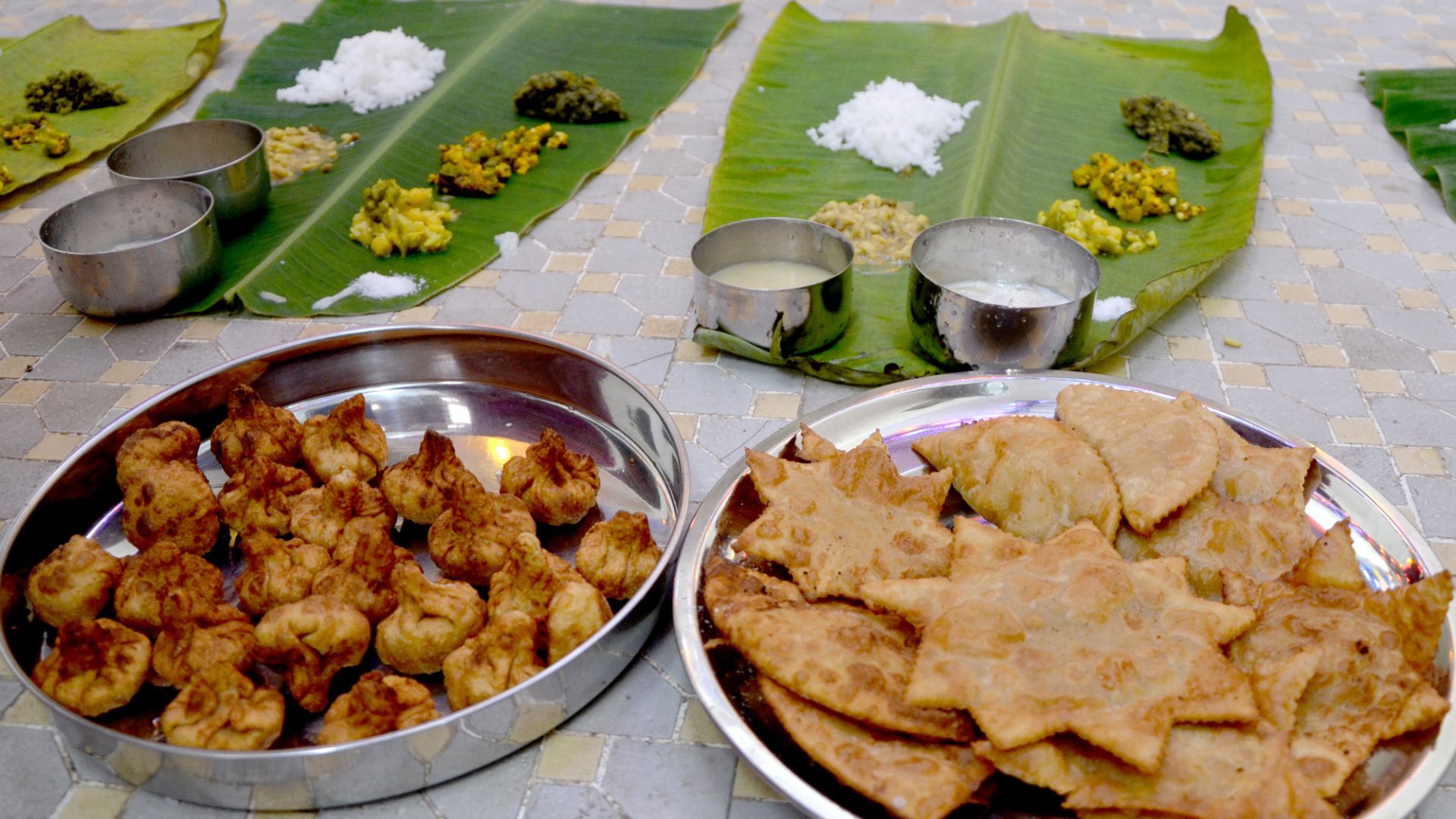
Whenever we think of any festival, the topic of festive food is not far away. It is in many ways integral to the festival and the way it is celebrated. As we celebrate Ganesh Chaturthi, we turn to one delicacy that is synonymous with the festival — the sweet and savoury nevri.
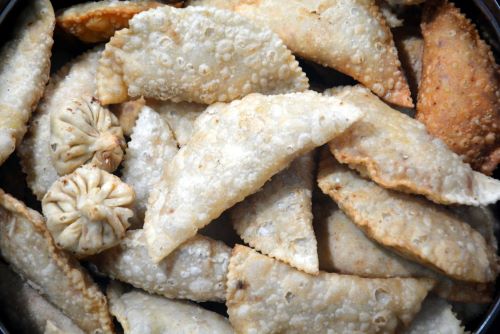
This crescent-shaped deep-fried flour parcel stuffed with sweet or spicy stuffing, is what defines Goa’s Chaturthi festivities.
Making these fried nevreos is a laborious task and the preparations start around 15 days in advance. The most common nevri has a dry, desiccated coconut stuffing, with semolina and dry fruits. For this, the grated coconut is dried for days. The other common stuffing is made of toasted gram flour or besan.
There is also a savoury, spiced version, which offers a welcome contrast to the sweetness. It is made with roasted gram flour, flavoured with spices such as asafoetida, turmeric and red chilli powder.
Alongside these nevreos, there are two other varieties traditionally prepared especially for the festival — purnachi nevri (filled with lentils and jaggery) and chunnachi nevri (made with a mixture of freshly grated coconut (‘chun’), jaggery, cardamom powder and pure ghee). Both fillings are enclosed in a flour pastry and deep-fried until golden. As these fresh fillings have a short shelf life, the nevreos are best consumed within a day or two.
Nevreos also hold a special place in the traditional vajem — a large basket of sweets, savouries and pooja items that parents present to their newlywed daughter and her new family. A nevri is an essential part of this customary gift, with the largest one traditionally reserved for the son-in-law.
NEVREOS: THEN AND NOW
Goan folklore expert and writer Jayanti Naik notes that, like many regional delicacies, the traditional nevri is made using locally sourced ingredients such as jaggery and coconut, particularly in the versions prepared on the first day of the festival. She points out that deep-fried nevreos with coconut or besan fillings are a more recent development, reflecting changing lifestyles and the influence of modernity.
“I hail from the hinterland of Goa, and even during my childhood, I only saw chunnachi and purnachi being made for Chaturthi. I believe making nevreos with besan or other fillings is a more recent development. Today, we have access to ingredients that were not traditionally local, such as dry fruits. The fact that these versions also have a longer shelf life and can be kept for several days has made them increasingly popular.”
In some families the nevreos are made and kept separately, to be eaten only after it is offered to deity (naivaidya).
Nowadays, this tradition of making nevreos, which once brought people together, is slowly fading with time. For city dwellers, caterers are helping keep the tradition alive.
These days, social media advertising of such homemade delicacies, along with pop-up bazaars, has made these sweets more convenient and accessible to everyone.
Naik observes that this is largely an urban situation, as in villages and semi-urban areas, women still make nevreos at home. “The middle class is still involved in this tradition of making them at home. They will make at least a few for the offering, as it is always considered a symbol of celebration.”
On that sweet note, wishing everyone happy a Ganesh Chaturthi!
Arti Das is a Goa-based freelance journalist who enjoys writing about art, culture and ecology
Comments (0)
Please login to post a comment.
No comments yet. Be the first to comment!