
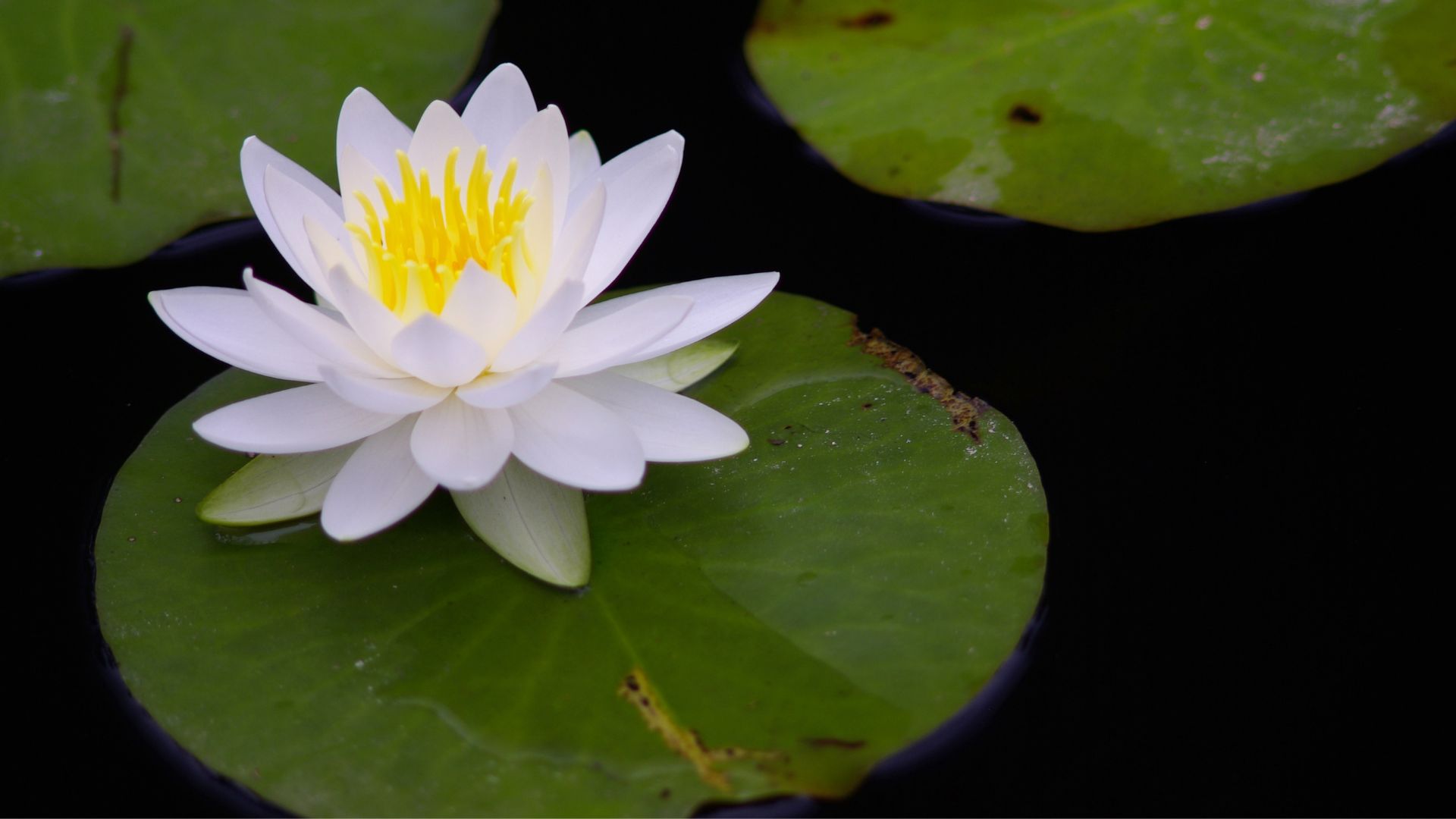
At Ganesh Chaturthi time, there’s a pretty white flower, that’s seen in flower markets. In Indian theology, the sacred lotus, Nelumbo nucifera, is considered as the seat of the gods. Whether it is the 'People's god', Ganapati or Ganesha, or the description of beauty as in Padma-pada of the only female Vishnu avatar as Mohini or the Indian National honours as Padma Shree, Padma Bhushan or Padma Vibhushan, the lotus is the highest common factor.
When we see water lilies or salkam in a natural setting or in a garden pool, we immediately call it a 'Lotus Pond'. The tradition of offering salkam to gods in the temple also makes us believe that it is a sacred lotus. Therein lies our confusion – all water lilies are not lotus, though lotus was earlier listed in the family of water lilies.
LOTUS OR LILIES
Water lilies are now classified into six genera and these do not include the sacred lotus, Nelumbo nucifera, although lotus seeds are often confused with the makana nut obtained from the Far Eastern Asia prickly water lily, Euryale ferox or Fox nut.
The plant family, Nymphaeaceae, includes the genus Nymphaea that is common in the Indian subcontinent of South Asia. The Victoria genus of South America evolved separately, but is very similar to the Euryale of Far Eastern Asia. These three genera are similar and are grouped as a triad.
The Ondinia, Barclaya and Nuphar genera are stand alone and the lily plants there in were earlier even classified in different families, like Barclayaceae, before the era of molecular genetics. The lotus family, Nelumbonaceae, is genetically different. So do not think that eating makana nuts makes you a lotus-eater!
The off-white coloured water lily, Nymphaea nouchali, is a common sight in some fallow paddy fields, especially the low-lying tollem that was cultivated with two crops of rice followed by another of vegetables, cowpea or chillies. Batim-Goa Velha-Pilar, Candolim, Pedda-Benaulim, Nagoa-Verna are some places where one can see water lilies on the side of the main road. I would not be surprised if the specific name has an Indian connection just like a crazy, little, word 'Doolally' has with the military establishment at Deolali in Maharashtra.
There are scientists and farmers doing hybridisation of water lilies to get newer colours for flowers. Starting with the natural white or magenta red salkam, we now have pink, red and blue flowered water lilies. My friend and organic farmer, Andre Leu, has bred water lilies in different shades of blue.
Though water lilies may appear to be free-floating, they are actually rooted in the soil. When creating a ‘lotus pond’, the lilies must be transferred along with the soil. Generally, they are translocated in a pot, basin or wicker basket with original soil, and then placed in the new pool with only that much water as to float the leaves and flowers just above the soil. The plant has to get acclimatised to the new environment as much as aquarium fish would need to; otherwise, it may suffer or even die. In this case, it is not just sunlight and shade, but also the quality of water that matters.
A freshly cement or painted ponda may simply kill the water lilies. Not for nothing is the concept of Padma-pada, the delicate feet. The grounding of water lilies needs care and attention.
Comments (0)
Please login to post a comment.
No comments yet. Be the first to comment!