
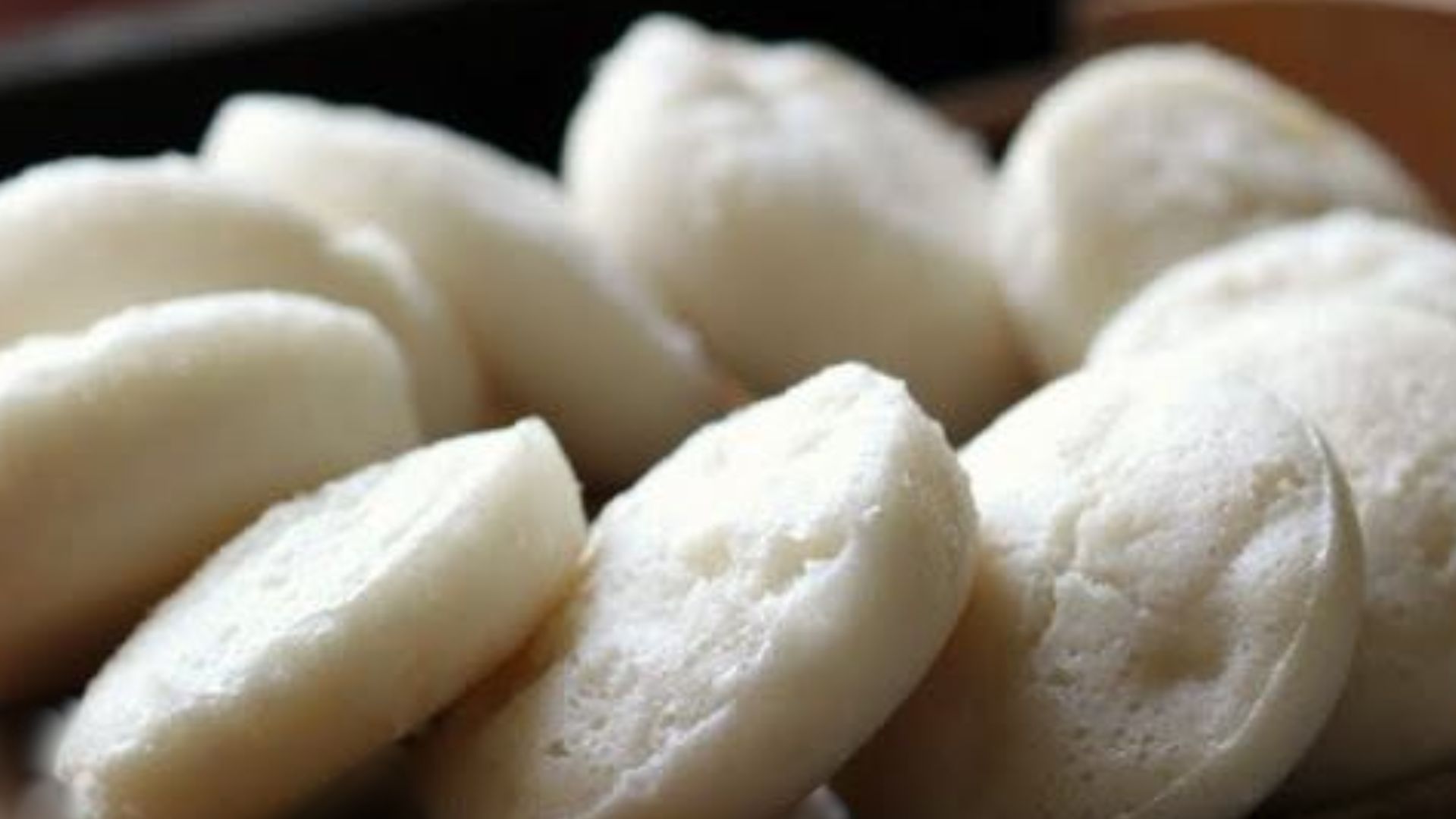
Sanna are those spongy, steamed rice cakes, made from a batter consisting of ground red rice (ukde) and freshly grated coconut. The rice and coconut are traditionally ground using toddy (sur), the fermented sap of the coconut palm.
Sanna are a popular accompaniment to Sorpotel, Xacuti, chicken curry and other meat curries. Their slight sweetness makes them the perfect pairing for these fiery, tangy gravies.
HOW THEY’RE MADE
To begin making sanna, the rice is first soaked for a few hours. It is then ground with toddy, after which, grated coconut, salt and sugar are added. The batter is left to ferment for some hours before steaming.
The fermented batter has tiny bubbles and a characteristic fermented smell. It is then transferred to greased moulds, and steamed for 20-25 minutes until cooked through.
TRADITIONAL TECHNIQUES
There are 2 types of sanna:
Sanna are small in size and cooked in uniform moulds. Traditionally, locally crafted copper utensils called compro are used, which generate steam under low pressure. It is important that the batter does not turn sour, and over-steaming should be avoided, as excessive evaporation can make the sanna hard.
MODERN METHODS
Toddy, an important ingredient required for fermenting the batter, is often replaced with yeast — either due to the unavailability of toddy or simply to save time, since yeast significantly reduces the fermentation period.
Some people even prepare homemade toddy using tender coconut water, fermenting it with active dry yeast, and many find the results quite satisfactory. In some cases, even Sprite is used as a substitute to make sanna.
Sanna are an excellent fermented food. Fermented foods are created through the action of microorganisms or beneficial bacteria that support overall health, particularly gut health. Fermentation is an enzyme-controlled chemical breakdown of organic substances.
Contrary to the popular belief that all bacteria are harmful, our bodies actually require certain beneficial bacteria to stay healthy and function optimally.
A GOAN ESSENTIAL
Sanna are light and are a good source of carbohydrates, fibre and trace amounts of vitamins and minerals. Both Hindus and Catholics in Goa prepare sanna, though their methods differ slightly. In Hindu households, urad dal is used as the leavening agent, whereas Catholic families rely on toddy. Sanna made with fresh toddy are an essential part of Catholic celebrations such as marriages, birthdays, feasts and Holy Communions.
Well-prepared sanna should be soft, fluffy, and never sour in taste. As we continue to hear about modern food concepts like probiotics, it’s worth remembering the many delicious dishes our ancestors perfected long ago using simple, natural methods such as fermentation.
Comments (0)
Please login to post a comment.
No comments yet. Be the first to comment!