
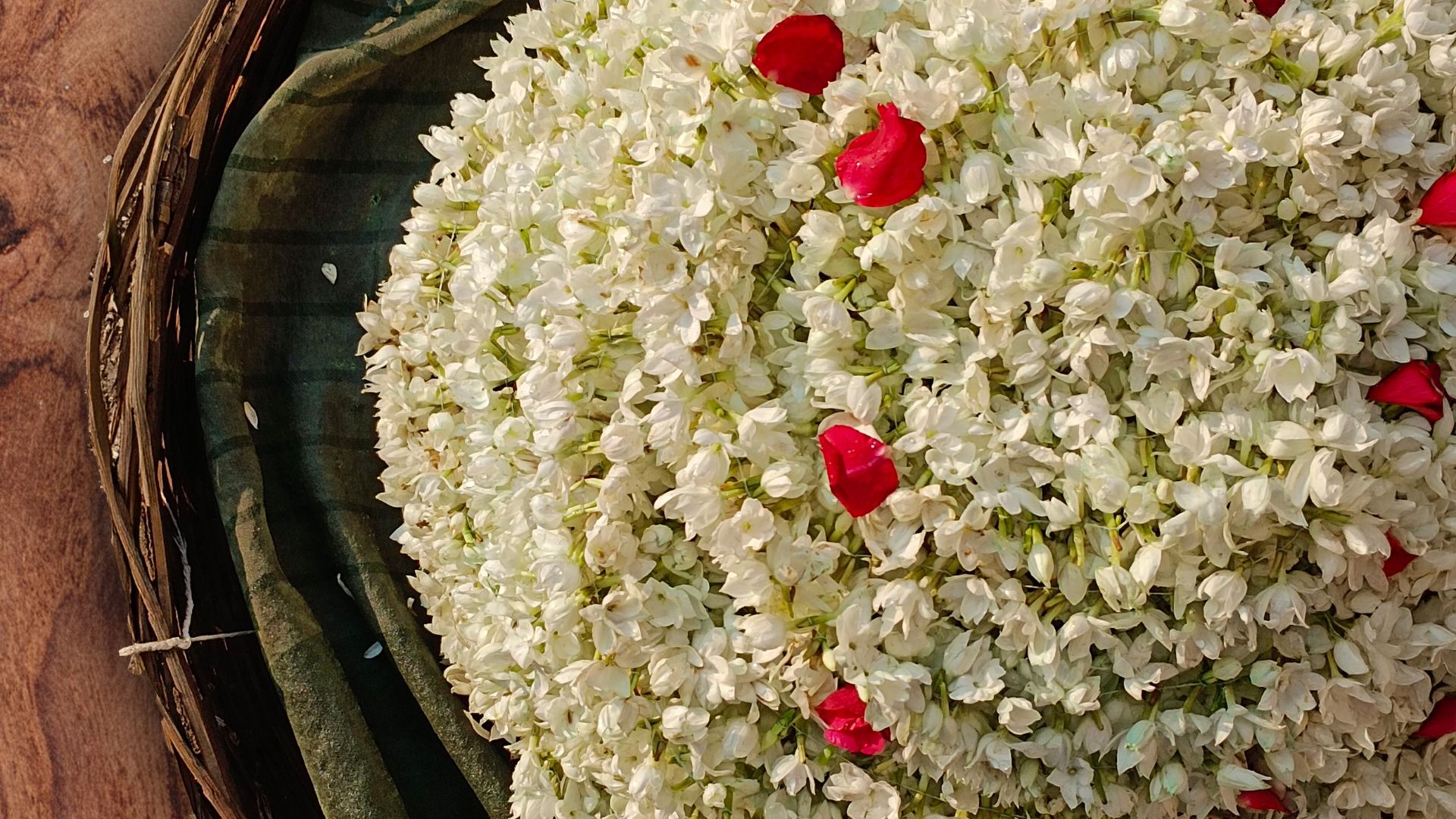
Goa is known for its dreamy beaches and lively festivals. Its culture goes back hundreds of thousands of years and is far more than food, folklore and traditions. An often overlooked cultural element is the many dainty, local flowers, most of which hold deep cultural and traditional importance. From temple offerings to hair garlands and festive decorations, flowers remain closely connected to the daily lives of Goans. Their fragrance, colours, and beauty reflect the beauty and richness of Goan culture.
FLORAL TRADITION
For many Goan women, stepping out without flowers in their hair feels incomplete. Early in the morning, village markets fill with the fragrance of fresh flowers as women buy strands of mogra, jasmine, abolim and surangi to wear throughout the day. Flowers are not just ornaments in Goa — they are part of tradition and identity passed down through generations.
One of the most loved flowers in Goa is crossandra, locally known as abolim. Its bright orange petals and soft texture make it popular for hair decorations and cultural celebrations. Though it has a mild fragrance, its beauty and freshness make it a favourite among Goan women.
Another flower deeply connected to Goa is Arabian jasmine. Known for its strong fragrance, mogra is widely used in temples, weddings, and even garlands. In Goa, it is believed that Lairai Devi loves mogra flowers, and devotees offer these flowers during prayers and temple rituals. The flower’s sweet fragrance spreads through homes, markets, and temple surroundings, especially during festive seasons.
Jasmine, locally called zayoo or zayo, is another flower closely tied to Goan traditions. During the peak flowering season, Jayechi Puja is celebrated in different parts of Goa and in several temples. The flower symbolises purity and devotion, while its calming fragrance fills homes and temple surroundings during mornings and evenings.
Among Goa’s most unique flowers is the Indian Cork Tree Flower, locally known as surangi or surngha. These tiny flowers are famous for their delicate fragrance and usually bloom during summer mornings. Though small in size, their scent is strong and long-lasting. Many Goans connect the smell of surangi with childhood memories and traditional village life.
BEYOND DÉCOR
Another important flower tradition is connected to Dhalo, one of Goa’s oldest women-led folk rituals performed after the harvest season. During Dhalo celebrations, women gather to sing folk songs, pray for prosperity, and celebrate community bonding. Flowers are an important part of these rituals and symbolise purity and happiness.
Selling flowers is also an important part of Goa’s local life. Many women wake up before sunrise to pluck flowers, prepare garlands by hand, and sell them in local markets or outside temples. During weddings, temple feasts, and festivals, the demand for flowers increases greatly, helping many local families earn a living.
Flowers in Goa are more than decorations — they are symbols of faith, beauty, tradition, and livelihood. Their fragrance continues to keep Goa’s culture alive from one generation to another.
Comments (0)
Please login to post a comment.
No comments yet. Be the first to comment!